
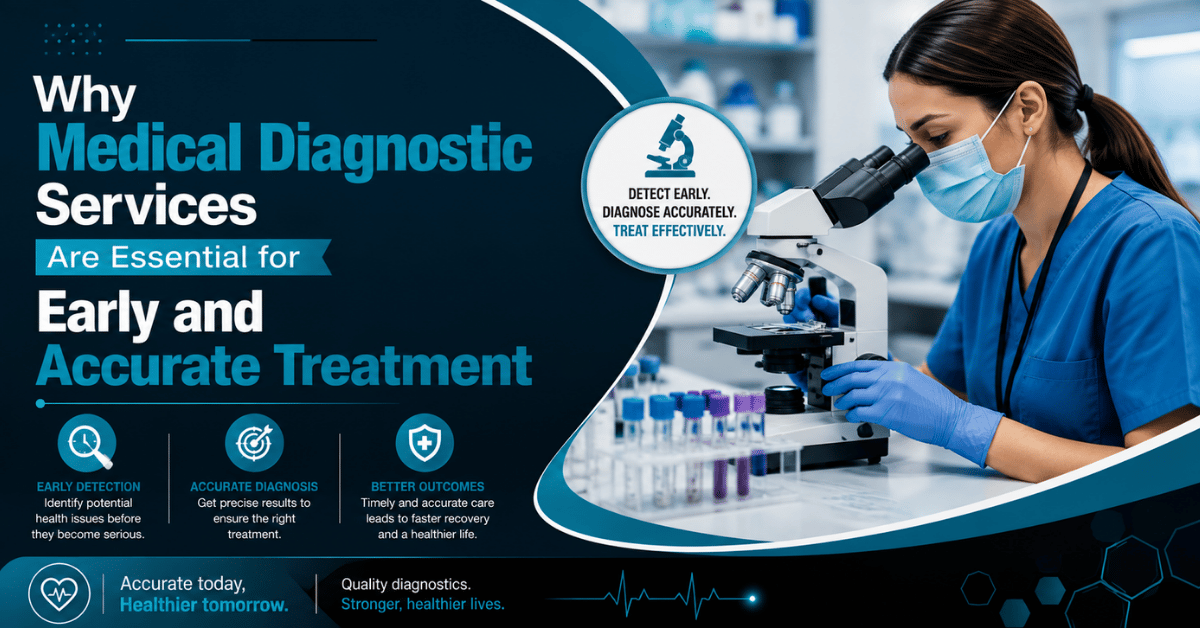
Diagnostic services for medical use are essential in the present healthcare system by helping doctors understand what could be happening within the body. From health and laboratory tests to screenings to diagnostic tests These services can help in the identification of health problems that could be present and supporting a diagnosis, evaluating ongoing health conditions and guiding the appropriate care.
We at Abundant Life Care Clinic, we believe that diagnostic testing must be linked to the larger picture of your overall health. The results of tests are most beneficial when they are viewed in conjunction with your medical history, symptoms and physical exam as well as family history and other pertinent details.
Whether you require regular health checks, assessment of symptoms that are emerging or continuous examination for a chronic illness Understanding the significance of diagnostic services will help you make more informed decisions regarding your health.
What Are Medical Diagnostic Services?
Diagnostic services for medical diagnostics comprise tests and assessments that are designed to provide information on the health of a person. Based on the symptoms of the patient and medical background, as well as the patient’s age, risk factors, and medical requirements, the doctor might suggest laboratory tests or screening, imaging, or any other diagnostic examinations.
Tests in the laboratory can analyse samples, such as urine, blood or body fluids, as well as tissues. The tests may provide details about the presence of substances, cells or other indicators related to health conditions. Diagnostic tests are used to identify a health issue and monitor an existing illness, evaluate treatment or identify changes over time.
To patients, this means that diagnostic tests are not just about obtaining a number or report. It’s about giving health professionals additional details that will aid in understanding the patient’s condition more fully.
In the Abundant Life Care Clinic, the patient-centered approach we employ concentrates on linking medical information to meet individual requirements.
Why Are Medical Diagnostic Services Important?
Diagnostic services are a great way to support various phases of healthcare. They can be beneficial in cases where a patient is suffering from symptoms, or when a healthcare professional is monitoring an illness, or when it is necessary to screen for preventive issues.
They Can Help Identify Health Concerns Early
Certain health issues can manifest without apparent symptoms in the early stages. Screening and testing that is appropriate may detect early signs of disease before symptoms are apparent.
Health screenings are specially designed to detect certain illnesses or conditions prior to when symptoms show up. Early detection can give patients and healthcare professionals more opportunities to examine the problem and decide on the best next actions.
This is one reason why diagnostic services are an essential component of preventive health care.
For instance, based on the risk factors of each individual and advice from healthcare professionals, they may conduct tests to assess the health implications of cholesterol, blood sugar levels kidney function, blood pressure as well as other health-related issues.
Diagnostic Testing Can Help Investigate Symptoms
These symptoms are not always linked to a specific problem. Headaches, dizziness, fatigue and weight changes or pain, and other symptoms could have multiple possible reasons.
Healthcare professionals may employ the process of differential diagnosis to examine a range of possible explanations for the problem and decide the tests or assessments that can aid in narrowing them down. Test results may give additional evidence to back or exclude some possibilities.
This is the reason diagnostic tests is not to be considered separately from medical evaluations.
Your provider could be thinking of:
- The symptoms you are experiencing now
- Medical background
- Family health background
- Supplements and medications
- Lifestyle aspects
- Physical examination results
- Laboratory results
- Diagnostic imaging or other information
The combination of these resources information will help you gain a greater knowledge regarding your condition.
How Diagnostic Services Support Accurate Treatment
The Right Information Can Guide the Next Step
One of the biggest advantages of medical diagnostic services is that they are able to provide data that aids healthcare professionals in making more informed choices.
Testing in the laboratory can help providers:
- Identify changes in health
- Support diagnosis
- Monitor certain diseases
- Examine whether the treatment is working
- Consider whether additional testing might be required.
- Compare current results to the results from previous years
The FDA states that tests in the laboratory can be used to detect health issues, assist in the diagnosis process of treatment plans, analyze the response to treatment and track health over time.
But, no single test should be taken as the final solution to a patient’s health situation.
Diagnostic Laboratory Services and Preventive Healthcare
Prevention Starts With Knowing Your Health
Prevention-based healthcare is about being vigilant instead of not waiting for a medical issue gets worse. The right screening and testing in the laboratory could be an element of this strategy.
Regular health exams can assist in identifying potential risks or changes that require extra focus. Based on your specific situation, your doctor might recommend specific tests or screenings for your laboratory in relation to your the age, medical history and relatives, signs and other risk factors.
For instance, lab tests could provide information on:
- Blood glucose
- Cholesterol
- Blood counts
- Kidney function
- Liver function
- Thyroid function
- Certain diseases
- Other indicators of health
The tests that are appropriate for you will vary between individuals. Your doctor can advise you the appropriate tests to your particular requirements.
If you’d like to know more about the options for healthcare that are available at the clinic, please visit the Services.
Common Types of Diagnostic and Laboratory Testing
Understanding Different Diagnostic Tools
Blood Testing
Urine Testing
Health Screening
Diagnostic Imaging
Diagnostic imaging produces images of the structures within the body. Depending on the medical situation, the imaging procedure may involve ultrasound, X-rays, CT scans MRI as well as other types of imaging. These tests are able to help healthcare professionals assess symptoms, detect ailments, track the severity of injuries or illnesses and provide guidance for care.
Monitoring Tests
Medical Diagnostic Services for Chronic Condition Management
Diagnostic services aren’t only valuable when a health concern is first identified—they can also support ongoing care after a diagnosis. Patients managing chronic conditions may need regular health assessments to monitor changes and evaluate their progress.
For example, blood glucose testing can help monitor diabetes, while other laboratory tests may provide information about kidney, liver, thyroid, or cardiovascular health.
Learn more about how diagnostic laboratory services support your healthcare and how regular monitoring can help providers determine whether a care plan should be maintained, adjusted, or reassessed.
Why Accurate Laboratory Results Matter
The effectiveness of diagnostic tests is dependent on the ability to interpret reliable data. Results from lab tests can impact critical healthcare decisions. This is why thorough and reliable testing and analysis are crucial.
It is important to note that the FDA as well as CMS have stressed the importance of reliable and accurate tests for diagnosing because the results of lab tests are a crucial factor in the clinical decision-making process.
Patients should be aware the fact that test results could be affected by many variables, such as medication, food and drink as well as age, and whether the instructions for the test were followed.
To avoid this, follow the directions of your physician prior to the test and talk about preparation with your healthcare professional.
What Happens After a Diagnostic Test?
Receiving a diagnostic or laboratory report doesn’t always mean that you know what it is all about by yourself.
Your doctor may interpret your results in conjunction with:
- The symptoms you are experiencing
- Physical exam
- Medical background
- Family heritage
- Test results from the past
- Medications
- Other diagnostic information
MedlinePlus states that laboratory results are not an all-encompassing picture. Doctors use them in conjunction with other clinical data to gain a better understanding of a patient’s health.
Your doctor may suggest:
- There is no further action
- Monitoring of routine
- Lifestyle shifts
- Further testing
- A follow-up appointment
- Treatment or further evaluation
The best next step is contingent on your particular situation.
The effectiveness of diagnostic tests is dependent on the ability to interpret reliable data. Results from lab tests can impact critical healthcare decisions. This is why thorough and reliable testing and analysis are crucial.
It is important to note that the FDA as well as CMS have stressed the importance of reliable and accurate tests for diagnosing because the results of lab tests are a crucial factor in the clinical decision-making process.
Patients should be aware the fact that test results could be affected by many variables, such as medication, food and drink as well as age, and whether the instructions for the test were followed.
To avoid this, follow the directions of your physician prior to the test and talk about preparation with your healthcare professional.
Take Control of Your Diagnostic Laboratory services Today
Get personalized Diagnostic Laboratory Services, ongoing medical support, and expert guidance designed to help you manage your condition and live a healthier, more comfortable life.
Medical Diagnostic Services for Older Adults
Seniors may face multiple health concerns at the same time, such as chronic illnesses, medication use, mobility issues, and the health effects of age. Diagnostic tests can offer valuable data for monitoring health and assisting with individualized treatment.
In the Abundant Life Clinic’s Senior and Geriatric Services focused on senior health, are designed to meet the specific needs of senior adults.
Diagnostic and laboratory tests that are appropriate can be a part of routine health care and preventive care and managing medications, chronic condition monitoring, and various other aspects of senior healthcare.
The objective is not just to have more tests. Testing should instead have a clearly defined healthcare purposes in line with the patient’s specific requirements.
When Might Your Provider Recommend Diagnostic Testing?
Diagnostic tests may be considered in the event of:
- There are new or unproven symptoms
- Your doctor needs more information regarding your health
- A chronic condition needs to be monitored
- Your treatment must be reviewed
- A preventive screen is a good idea.
- Results from the past must be evaluated
- Your physician wants to examine the possibility of a health issue
- More details are required before making a medical decision
Every patient is not required to undergo the identical tests. Your physician will decide what tests are appropriate for your particular circumstances.
Seniors may face multiple health concerns at the same time, such as chronic illnesses, medication use, mobility issues, and the health effects of age. Diagnostic tests can offer valuable data for monitoring health and assisting with individualized treatment.
In the Abundant Life Clinic’s Senior and Geriatric Services focused on senior health, are designed to meet the specific needs of senior adults.
Diagnostic and laboratory tests that are appropriate can be a part of routine health care and preventive care and managing medications, chronic condition monitoring, and various other aspects of senior healthcare.
The objective is not just to have more tests. Testing should instead have a clearly defined healthcare purposes in line with the patient’s specific requirements.
How to Prepare for Medical Diagnostic Testing
A Little Preparation Can Make Testing Easier
In the case of a test you’re taking, it’s possible to be aware of specific guidelines prior to the test.
Your provider could request that you:
- A certain amount of time
- Beware of certain foods or drinks
- Avoid or limit the use of certain medicines as directed by your doctor.
- Drink water or avoid it
- You must arrive at a particular time
- Include relevant medical information
- Follow the other test-specific directions
Don’t alter your prescriptions or stop taking medication on your own just because you’re having lab tests. Talk to your doctor about what you need to do prior to the test.
Follow the instructions carefully to make sure that your test is conducted in the proper conditions.
Diagnostic Testing Is Part of Comprehensive Healthcare
Connecting Testing With the Care You Need
Diagnostic services for medical conditions are the most beneficial when they are linked to complete healthcare.
A test could offer important data, however your doctor is still required to know your general health. This is the reason why diagnostic care is often integrated along with preventive health as well as chronic disease management and other special services.
In the the Abundant Life Care Clinic Patients can take a look at the range of services specifically designed to address the various needs.
Why Choose Abundant Life Care Clinic?
Patient-Centered Care From Evaluation to Follow-Up
Healthcare should not be an endless series of examinations and visits. At Abundant Life Care Clinic, our focus is on identifying the person who is who is behind the test results.
We emphasize:
Personalized Care
Clear Communication
Preventive Thinking
Ongoing Support
Coordinated Healthcare
Medical Diagnostic Services: The Bottom Line
Diagnostic medical services are an essential part of healthcare since they offer details that help healthcare professionals determine the possibility of a problem, study symptoms, track conditions, and make informed choices regarding treatment.
From medical screenings to diagnostic tests, the right tests can aid in early identification and a better treatment plan. However, results from diagnostic testing must always be considered in the context of the patient’s overall health and not be viewed as a standalone event.
At Abundant Life Care Clinic, we aim to make health care more individualized, accessible, understandable, and integrated. If you’re seeking preventive treatment, are managing an ongoing health issue or require an assessment to determine if you have a health issue, the right diagnostics can be crucial to your journey to health.
Find out the details about our Diagnostic & Laboratory Services and learn how we can assist your medical requirements.