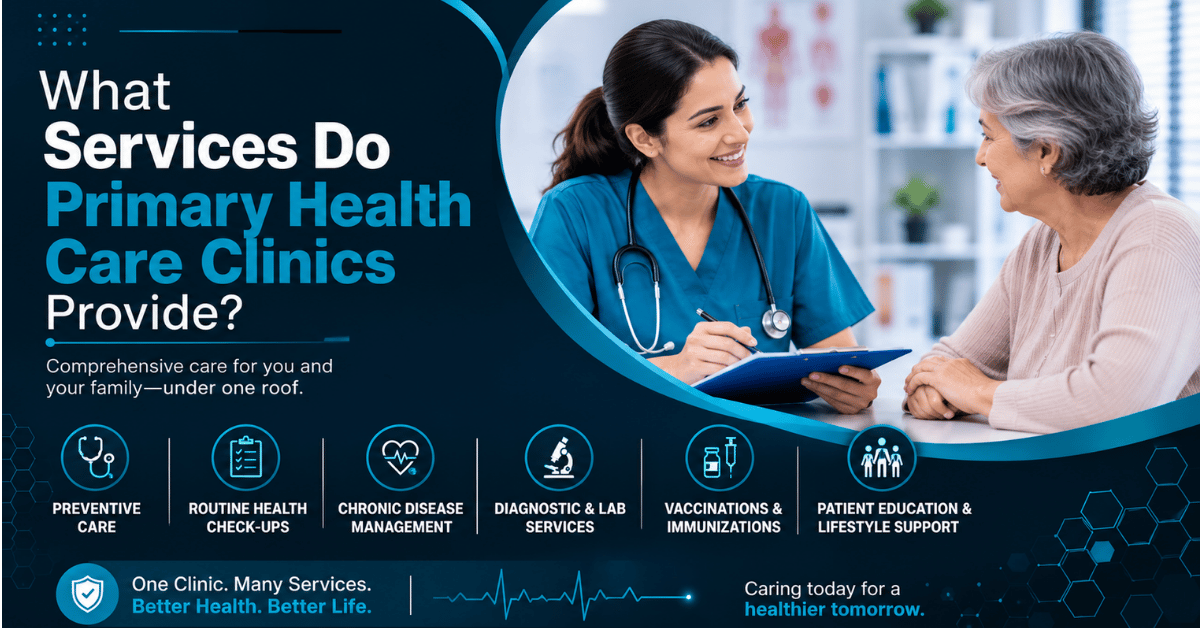
Primary health clinics are vital in helping patients take control of their health through routine medical visits, the treatment of typical health issues, as well as chronic condition management and continuous health advice. Instead of waiting until a health issue gets severe, primary care is an ongoing source of information with patients who can talk about issues, track their health, and receive the appropriate medical assistance.
We are at Abundant Life Care Clinic, our approach to primary care is centered around individualized, patient-focused healthcare that is based on individual requirements. If you require an annual check-up or preventive treatment, an evaluation of a new issue, or continuous support for an ongoing health issue, primary care can be the foundation you need for your overall health journey.
Knowing what primary health clinics offer will help you determine when you should seek treatment and what kind of services are appropriate for you, as well as the ways regular primary care can help improve your long-term health.
What Are Primary Health Care Clinics?
Primary health clinics are health care facilities where patients receive initial contact, routine, preventive, and regular medical attention. The primary care clinic is generally an easy point of contact for all healthcare needs. It can assist in coordinating the treatment of patients who require more services or a specialist’s evaluation.
The World Health Organization describes primary healthcare as a key part of the health system that emphasizes accessibility, continuity, completeness, coordination, and a focus on people-centered health care.
The primary health clinic can assist patients with:
Health exams routinely conducted
Preventive healthcare
Wellness visits
Minor health concerns
Management of chronic diseases
Health screenings
Medical-related issues
Health education and lifestyle advice
Follow-up care
Referrals for specialized care when suitable
The specific services offered differ from one facility to another, and patients must confirm what services are provided by their physician.
Why Is Primary Care Important?
Primary care goes beyond just visiting an acupuncturist when you are sick. It is a way to ensure continuity through various stages of life and aid patients in developing an ongoing connection with their health care provider.
A primary care physician can be familiar with your medical background, medication as well as health goals, previous issues, and risk factors. This can be useful when assessing new symptoms or preparing preventive care.
Primary care also offers the chance to detect problems that could be present earlier, through medical assessments as well as recommended screenings.
As per the World Health Organization, primary healthcare supports health promotion and prevention of disease, treatment, rehabilitation, as well as other vital health requirements throughout the course of life.
Primary care is an essential component of a proactive health strategy that is proactive.
Routine Primary Care Visits
One of the main reasons why people go to primary health clinics is to get routine medical attention.
A regular appointment provides you with an opportunity to talk about your health status or health concerns, ask questions, review the medications you are taking, and discuss any issues that may not require urgent or special care.
Based on your personal requirements, a regular appointment could consist of:
Review of medical background
Discussion of symptoms currently in the news
Vital sign assessment
Physical exam
Review of medication
Preventive health discussion
Screenings that are recommended
Lifestyle guidance
Plan for follow-up
Regular visits can aid in establishing a baseline for your health, making it easier to spot any changes in your health in the course of time.
Preventive Healthcare
The goal of preventive care is to maintain the health of patients and identify any potential issues before they become more dangerous.
Health screenings as well as wellness assessments, vaccinations, lifestyle counseling, and other services are based on the individual’s needs.
Preventive health care is not the same for every person. Family history, age, health history, risk factors, lifestyle, and other aspects could affect the type of preventive treatment that is appropriate.
For instance, your provider might talk about:
Monitoring blood pressure
The body’s weight and composition
Cholesterol screening
Blood glucose evaluation
Cancer screening guidelines
Vaccination needs
Healthy nutrition
Physical exercise
Tobacco and alcohol consumption
Sleep habits
Other health risks for individuals
The objective is not to conduct unnecessary tests or procedures. Instead, preventive care needs to be tailored to the individual’s needs.
Wellness Visits
Wellness appointments give you the chance to look a bit deeper at your health, rather than just focusing on one specific problem.
A wellness appointment could include a review of your health condition and discussing your lifestyle choices, as well as identifying risk factors and determining whether preventive measures are appropriate.
These visits can be especially beneficial because they can encourage patients to consider the long-term health of their body rather than just temporary symptoms.
If you’ve not received a health evaluation routinely in the past, arranging your appointment at the Abundant Life Care Clinic is a great start to discuss your health care requirements.
Diagnosis and Treatment of Common Health Concerns
Primary care clinics also provide treatment and evaluation for a variety of common health issues that are common.
Patients can seek primary healthcare for problems such as:
The respiratory system and coughs can be a source of discomfort.
Fever
Fatigue
Headaches
Minor infections
Digestive concerns
Skin-related problems
Allergies
Pain
Sleep issues
General changes in health
The proper evaluation will depend on the symptoms as well as the medical history of the patient.
If you have a problem that requires special tests or specialist treatment, the primary healthcare provider might suggest a further assessment or a referral.
Chronic Disease Management
A chronic illness usually will require more than a single appointment.
Patients with chronic diseases like hypertension, diabetes, as well as asthma, high cholesterol, or any other chronic illness may benefit from regular health monitoring and follow-up on their medical condition.
Primary care is a great resource for coordination:
Regular health exams
Monitoring of health indicators relevant to the situation
Review of medications
Lifestyle tips
Follow-up appointments
Services for prevention
Additional tests if needed
Specialist coordination as required
The ongoing primary care program can aid patients and their doctors in identifying changes and deciding whether the care plan currently in place is appropriate.
Diagnostic and Laboratory Services
Diagnostic testing can offer additional information for healthcare professionals who are required to examine symptoms, observe an illness, or provide prevention-based healthcare.
The patient’s condition will determine the appropriate treatment; diagnostic tests may comprise specific laboratory tests or assessments.
Test results aren’t normally taken into account alone. The providers consider them in conjunction with symptoms and the medical background, exam results, medications, as well as other pertinent information.
Patients who want to know more about this field of treatment can look into Diagnostic and Lab services.
The information provided by diagnostics can help healthcare professionals make better-educated decisions about the most appropriate next actions.
Medication Management and Review
A lot of patients are taking some prescription or non-prescription medication. When health requirements change, prescription lists can be updated as well.
Medical reviews can help doctors to determine what the patient is currently taking, and whether further consultation or follow-up is suitable.
Patients should inform their doctor about:
Prescription medicines
Medicines that are available over-the-counter
Vitamins
Supplements
Allergies
Medication side effects
Recent changes to medications
Never stop or modify the dosage of a medication you are prescribed without discussing it with a qualified healthcare professional.
Health Education and Lifestyle Guidance
Primary care also provides the chance to talk about daily decisions that could impact the health of your family for the long term.
Your provider could discuss subjects including:
Nutrition
A healthy diet will improve overall health and reduce certain health dangers.
Physical Activity
Regular exercise can improve cardio health and mobility, strength, and overall well-being.
Sleep
The way you sleep can impact the quality of your energy, concentration, mood, and overall general health.
Stress Management
Finding healthy methods to manage stress can be a component of a larger wellness plan.
Tobacco and Alcohol
Your doctor can explain how alcohol and tobacco consumption can impact your health and offer the appropriate advice.
Primary care offers the chance to incorporate these discussions into the routine of the routine healthcare instead of waiting for a problem to develop.
Senior and Geriatric Healthcare
Seniors may have health requirements that are different from the needs of younger adults. They might be managing multiple ailments, taking multiple medications, or experiencing changes in their mobility or memory. They may also be experiencing issues with independence.
Comprehensive senior health care may include preventive care, chronic illness management and health monitoring, medication review, as well as other customized services.
In the Abundant Life Clinic’s Senior & Geriatric Care service, aged adults can look into healthcare that is tailored to their particular requirements.
This is also an illustration of why selecting the right primary care doctor who is aware of your health concerns over the long term is beneficial.
Follow-Up Care
The healthcare process doesn’t end after a single appointment.
Certain health issues require follow-up visits to determine if your symptoms have improved or if the treatment is effective or if further testing is required.
The follow-up care could include:
Examining the test results
Examining for signs
Monitoring chronic illnesses
Examining medication
Evaluation of the response to treatment
The process of updating a health plan
Identifying whether you require additional services
Regular follow-up is a great way to keep the health system organized and able to respond to any changes regarding your overall health.
Care Coordination
Sometimes, patients require services that go beyond the scope of primary health care.
A primary care physician can assist in coordinating healthcare when a more thorough evaluation or specialist treatment is required.
It could mean recommending that patients see a doctor for further diagnostic testing or seek out another kind of medical services.
Care coordination is a way to help patients navigate through the healthcare system while ensuring primary care is included in the larger scope of care.
This is one reason why continuity and communication is crucial when deciding between main health practices.
How to Choose the Right Primary Health Care Clinic
Many clinics may not be suitable for every patient.
When looking at primary health care clinics, take into account the following factors:
Location and Accessibility
A clinic that is conveniently located can help you attend regular appointments as well as follow-up appointments.
Available Services
Check if the clinic offers the kinds of medical services you’re likely to require.
Communication
A healthy healthcare relationship demands open communication and an opportunity to have questions.
Continuity of Care
Check if the clinic is able to help you with your medical requirements over time.
Preventive Care
Find out if the practice is focused on screenings, wellness, or proactive health care.
Appointment Options
Be aware of how appointments are scheduled and if the available options for care fit your situation.
Insurance and Costs
Check for insurance participation as well as copays and other costs that could be incurred prior to receiving treatment.
Healthcare professionals also suggest taking into consideration things like the accessibility of information, qualifications as well as insurance, office processes, and if the provider’s method of care is compatible with your requirements.
Take Control of Your Primary Care services Today
Get personalized Primary Care Services, ongoing medical support, and expert guidance designed to help you manage your condition and live a healthier, more comfortable life.
Primary Care for Different Stages of Life
Primary care may alter as your healthcare requirements evolve.
Young Adults
Primary care could concentrate on lifestyle, preventive health, immunizations and other emerging health issues.
Adults
Adults could require regular health screening, physical examinations, chronic medical treatment, drug reviews, and treatment for common ailments.
Older Adults
Older adults might benefit from more thorough monitoring of chronic diseases and medications, mobility issues, cognitive disorders, and healthy lifestyle choices.
Find the Right Primary Care for Your Health
Choosing the right primary care provider can make a meaningful difference in your long-term healthcare journey.
Explore our guide on how to find the best health primary care for your healthcare needs to learn what to consider when choosing personalized, accessible, and comprehensive primary care.
Primary Healthcare Clinics in contrast to. Urgent or Emergency Care
Knowing where to seek help will help avoid confusion.
Primary healthcare is usually suitable for routine health care routine, preventive treatments, ongoing illnesses, and many other non-urgent issues.
Urgent treatment could be the best option for certain conditions that require immediate attention, but aren’t life-threatening.
Emergency medical care is a must for critical or life-threatening situations.
If you’re experiencing symptoms that might indicate a medical emergency, you should seek urgent medical attention instead of waiting for a regular medical appointment.
Why a Long-Term Primary Care Relationship Matters
Healthcare can be more tailored if the provider knows your medical background.
As time passes, a primary care physician might become acquainted with you:
Medical background
Family health and family history
Medications
Allergies
Test results from the past
Lifestyle
Health goals
Chronic illnesses
Preventive care needs
This consistency makes it easier to recognize the changes in healthcare and talk about decision-making.
Primary care is founded on continuity, accessibility, coordination, completeness, and person-centeredness.
Primary Health Care Clinics: Frequently Asked Questions
What are the services that primary health clinics provide?
Services may include routine health and preventive health care and wellness visits, as well as evaluation of common ailments, managing chronic conditions, medicine reviews, health monitoring and care coordination.
How often should I go to an office for primary care?
The frequency that is appropriate for you depends on your medical history, current health conditions as well as risk factors and particular health issues. Your physician can advise you on an appropriate timetable.
Does primary care aid in preventing illnesses?
Yes. Prevention can be as simple as screenings such as health assessments, vaccinations, and lifestyle counseling, as well as other strategies that are designed to minimize the risk of developing health problems.
Can primary care manage chronic diseases?
Yes. Primary care can offer ongoing monitoring and treatment for a variety of chronic health conditions.
Where can I find the answers to frequently asked primary care questions?
Check out this primary care FAQs page for more details.