
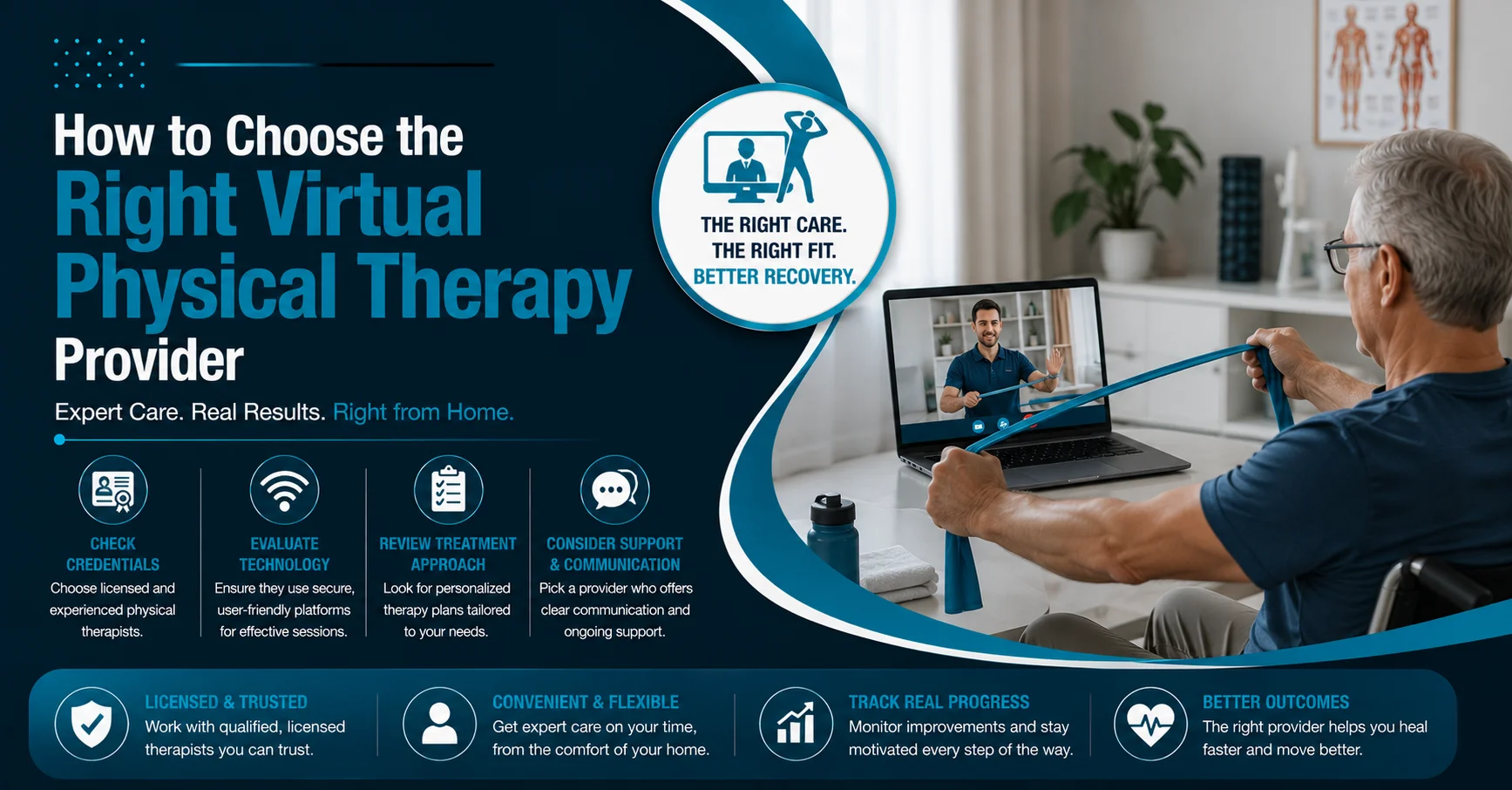
Physical therapy plays an important part in helping patients improve their movement and manage pain, as well as recover from injuries and resume their normal activities. In the past, physical therapy took place in a medical clinic where patients saw their therapist face-to-face. Technology has now created an alternative option, namely virtual physical therapy.
Through virtual therapy, patients could be able to talk to an acupuncturist via an appointment via video, in which they can discuss their concerns and goals, practice therapeutic exercises, and receive advice from the comfort of their homes. For certain people, it can make physical therapy more convenient and accessible.
But it is not the case that every online physical therapy company provides the same quality of service. Finding the right service requires more than simply searching to find the most popular virtual therapist on the internet. It is important to think about the credentials of their professionals, their expertise, experience, technology, communication, treatment accessibility, price, insurance, and whether virtual therapy is suitable for your particular condition.
This guide will show you how to select the most suitable virtual physical therapy service and the questions you should ask prior to scheduling the first session.
What Is Virtual Physical Therapy?
Virtual Physical Therapy, sometimes known as telehealth physical therapy or tele-physical therapy, is the practice of providing physical therapy via the internet using digital technology.
Instead of going for a visit to the physical therapy center, patients can meet the physical therapist on a secure video platform. Based on the provider and the requirements of the patient, virtual appointments can include:
Discussion of symptoms and medical background
Reviewing limitations on movement
Paying attention to posture and movement
Exhibiting exercises for therapeutic purposes
Create a program for home fitness
Examining the progress
Offering education on the benefits of movement and recovery
Answering questions during appointments
Modifying exercises in accordance with progress
According to Telehealth.HHS.gov, telehealth is a way for patients to avail certain physical therapy treatments without the need to visit the clinic or office of a provider. Videos, encrypted communications, as well as other digital tools can help with the delivery of physical therapy remotely.
Virtual care does not mean that all aspects of physical therapy are or should be done on the internet. Certain conditions require hands-on assessments and manual treatment, as well as specialized equipment, or a physical exam.
To this end, a reputable provider should determine the appropriateness of virtual treatment instead of automatically concluding that online therapy is the best option.
Why Are More Patients Considering Virtual Physical Therapy?
Convenience is among the main reasons why people think of an online session of physical therapy.
The idea of traveling to a clinic a few times a week is difficult for those with hectic schedules, limited mobility, physical limitations, or even responsibilities at home. Virtual appointments may reduce some of the transportation that is typical for physical therapy.
Telehealth.HHS.gov states that it is possible to use virtual therapy for physical therapy. It could enhance accessibility, cut down on travel time, let patients exercise in their home, and help them to stick with a fitness routine.
Virtual physical therapy can be particularly appealing to those who:
Are you experiencing difficulty in traveling?
Stay away from an acupuncture center
Do you have transportation restrictions?
You prefer receiving suitable medical attention at home
Are you a family member or do you have work schedules
You will require follow-up support
You need help with exercises for home use
Do you prefer a mixture of both in-person and virtual services
The objective, however, should not be merely convenience. The most important factor to consider is whether the healthcare provider can offer safe, effective, and individualized care to your requirements.
What to Expect During a Telehealth Appointment
Wondering how do telehealth appointments work and whether virtual healthcare is right for you? Telehealth allows patients to connect with a healthcare provider remotely using a smartphone, tablet, or computer, making appropriate medical consultations more convenient from home.
During a virtual visit, you can discuss symptoms, medications, chronic health concerns, preventive care, and follow-up needs while your provider determines the appropriate next steps. Learn more in our complete guide, How Do Telehealth Appointments Work?, and discover what to expect before, during, and after your virtual appointment.
How to Choose the Right Virtual Physical Therapy Provider
1. Verify That the Physical Therapist Is Licensed
The first thing you should be sure of is that the person who is providing therapy is a licensed physical therapist who is licensed.
A professional designation, attractive website, or online reviews shouldn’t substitute for verification of credentials. The American Physical Therapy Association recommends making sure that physical therapy services are provided by an authorized physical therapist. It also mentions that it is true that PT as well as DPT are often used as professional qualifications.
Before you schedule an online PT appointment, you should think about:
Are they licensed?
What kind of credentials do therapists have?
Which state or states are therapists licensed in?
Does the service provider have any experience dealing with my situation?
Are they qualified to provide telehealth services in the area I reside?
Telehealth licensing requirements are different for each state; therefore, patients must ensure that the provider is authorized to offer health services within their area.
2. Look for Experience With Your Condition
Physical therapists are able to treat a variety of different ailments; however, individual therapy providers may have distinct specializations.
One example is that a trainer may often assist people recovering from injuries sustained during sports and another might focus on the elderly or neurological issues or orthopedic issues, balance issues, or chronic discomfort.
When looking for an online physical therapy service, look for evidence of experience that is related to the issue you are facing.
Potential questions include:
Have you dealt with patients suffering from my illness?
How often do you handle similar instances?
Do you work with seniors?
Have you had experience with post-surgical rehabilitation?
Are you able to help with mobility issues and balance?
Do you offer home-based training programs?
How can you track progress from a distance?
A: The American Physical Therapy Association recommends seeking out whether a PT regularly helps you or patients who have similar requirements.
3. Understand What Happens During the First Appointment
A professional who is a good virtual physical therapy will clearly outline what you will be able to expect at your first appointment.
A first PT appointment might consist of a discussion about your physical symptoms, medical history and goals, physical limitations as well as daily activities. your previous treatments.
The therapist might require you to perform specific movements while they watch your movements through the lens.
For example, based on your health condition, your therapy provider might request that you:
Move across the room
Sit and stand
Move an arm or leg
Complete a balance workout
Perform a specific move
Complete the exercise
Describe pain during particular activities
The doctor must explain the reason for every assessment and ensure that you comprehend the treatment guidelines.
If a service provider claims to offer an unstandardized program without getting to know your particular circumstances, you should consider an alternative.
4. Make Sure the Technology Is Easy to Use
Technology should improve healthcare and not cause another hurdle.
Before selecting a virtual therapy provider, be sure to know the technology needed.
Most video-based telehealth sessions will require:
A tablet, smartphone, or a computer
A working camera
A microphone
Headphones or speakers
Reliable Internet access
A private space reserved to make an appointment
It is reported that the American Physical Therapy Association states that patients typically require devices with cameras and microphones, as well as an internet connection that is reliable for virtual physical therapy sessions.
Contact the service provider:
Which platform do you prefer to use?
Do I have to download any software?
Do I have the ability to use my phone?
What will happen if my connection goes down?
Do you give technical instructions?
Could someone assist me in testing the system before my appointment?
A good company will make the process simple.
5. Consider Privacy and Security
Health care appointments require private information. Privacy is an important factor when choosing the right virtual healthcare service.
Ask the provider how they protect your personal health information, and what technology is used to make online appointments.
You must also be in a quiet space where you are able to talk freely about your health concerns and complete exercises without interruptions.
Telehealth.HHS.gov recommends taking into consideration the privacy of patients as well as HIPAA compliance when developing the telehealth physical therapy service.
Don’t hesitate to ask your doctor what information they will protect before you begin treatment.
6. Ask Whether the Provider Offers Personalized Treatment
The main benefit of having a trained physical therapist is the ability to receive care specific to your needs and goals.
Your exercise routine should not be based on watching workout videos.
A customized virtual program for physical therapy can be based on:
The symptoms you are experiencing
Your mobility
Your strength
Your level of activity
Your medical background
Your routine every day
Your treatment goals
Your home environment
Your development over time
The therapist is able to modify exercises as you gain experience or if exercise creates discomfort.
A personalised approach could make virtual care more meaningful than just following a standard online routine of exercise.
7. Ask About Home Exercise Support
Home exercises are frequently an essential part of physical therapy.
During your virtual sessions, your therapist will perform exercises or watch the way you complete the exercises. This allows your therapist to give feedback on your method.
A reliable virtual therapy service provider must be able to explain:
How to complete each exercise
How often should you do it?
How many times can be the most appropriate?
What are the expected sensations?
What are the signs that should prompt you to cease
How can exercises be improved?
How will your progress be rated?
Telehealth.HHS.gov also outlines the application of digital exercise videos, equipment, pictures, and home-based programs as tools that help with tele-physical therapy.
8. Find Out How Progress Is Measured
Therapy for physical injuries should be a continuous process, not a string of appointments that are not scheduled.
Ask your physician how they will tell if the treatment is effective.
In accordance with your medical state of health, you may see improvement in the following areas:
Strength
Balance
Flexibility
Mobility
Motion range
Walking ability
Practice tolerance
Treatment of pain
Ability to perform daily tasks
Your therapist must be able to review your progress and modify your plan as needed.
If your condition isn’t getting better as you would expect, your healthcare provider will also be able to suggest different options or suggest an in-person evaluation if necessary.
9. Ask About Hybrid Care
A major thing to ask is whether or not the service provider has a hybrid model of physical therapy.
Hybrid care is a hybrid of online appointments and traditional visits to the clinic when necessary.
This is beneficial because certain areas of physical therapy may be at telehealth. However, other aspects may require hands-on assessment or treatment.
Telehealth.HHS.gov specifically defines multi-modal care or hybrid as a method of combining traditional in-person and telehealth services. The site also notes that some circumstances–such as a requirement for physical examinations that are direct or, hands-on manual treatments- make an in-person appointment in person more appropriate.
A healthcare professional who knows the appropriateness of virtual care and the times it’s not. This can aid in creating a safer and more efficient treatment plan.
10. Check Insurance and Out-of-Pocket Costs
Cost is another aspect to consider when choosing physical therapy services online.
Before starting treatment, you should ask:
Does my insurance cover the cost of virtual therapy?
Does the provider belong to the network?
What is my copay?
Is a deductible involved?
Are there additional fees to pay for visits via virtual?
If I require an appointment in person?
Do you provide self-paying options?
It is recommended that the American Physical Therapy Association recommends verifying whether the clinic you choose to visit accepts your health insurance plan, and then calling your insurance company to verify the individual costs out of pocket.
Insurance coverage may vary; therefore, do not think you are covered for virtual physical therapy merely because in-person physical therapy in person is covered.
11. Evaluate Communication
Communication is crucial in cases of remote treatment.
You should be able to ask questions and describe any changes to your symptoms.
Find a service provider that:
Be attentive
Explains recommendations clearly
Gives understandable instructions
Answers questions
Clear follow-up instructions
Care is adjusted based on your feedback
Describes the times and reasons why you should get a further assessment
A good communication system can make virtual appointments easier to comprehend and follow.
12. Read Reviews Carefully
Reviews on the internet can offer valuable information, but they shouldn’t be the sole factor when selecting a service.
When you read reviews, be sure to look for patterns that are in relation to:
Professionalism
Communication
Appointment availability
Technology
Responsiveness
Personalized care
Overall experience of the patient
A company that has hundreds of positive reviews isn’t necessarily superior to those with fewer reviews.
Review reviews as a single source of information, along with the credentials, experience, price, and your own personal consultation with the company.
13. Ask About Appointment Availability
Physical therapy typically requires several appointments, and it is important to plan your appointments.
Find out whether it is easy to make appointments and if appointments are arranged to fit into your schedule.
A reputable provider could provide:
Morning meetings
Evening time appointments
Flexible scheduling
Virtual Follow-ups
Online scheduling
Reminders for appointments
When appointments become difficult to schedule, it could make it difficult to keep up with your treatment program.
Telehealth for Convenient Healthcare Access
Virtual healthcare can be beneficial in situations where traveling to a doctor’s office isn’t feasible or an individual’s circumstances are suitable for remote medical care.
In the Abundant Life Care Clinic, Telehealth is a great tool for medical consultations, follow-up treatment as well as chronic care support, preventive discussions, and other pertinent medical requirements.
You can find out details about our clinic’s Telehealth services and decide if an online medical appointment might be suitable for your health requirements.
It is crucial to keep in mind it is important to remember that primary care telehealth, as well as virtual physical therapy, aren’t the same type of service. A primary care physician will help you evaluate general health conditions, talk about the symptoms, address medical issues, and decide whether you need a different kind of healthcare professional, for example, a physical therapist.
What Conditions Can Virtual Physical Therapy Help With?
Virtual physical therapy is a way to provide healthcare for a variety of ailments and scenarios. Telehealth.HHS.gov lists examples such as lower-limb injuries, sports injuries as well as lower back pain. Tests of balance and movement, and post-hospital safety check-ups.
Based on the condition of the patient and the assessment of the therapist, virtual physical therapy could be considered to:
Lower Back Pain
A therapist might analyze movement patterns and provide exercises designed to build strength as well as mobility and function.
Sports Injuries
Certain sports injuries may be treated using training in virtual form and monitoring progress, based on the degree and type of injury.
Post-Surgical Rehabilitation
Certain rehabilitation follow-ups could be suitable for telehealth; however, other stages might necessitate an in-person examination.
Balance and Mobility Concerns
Virtual sessions can enable therapists to observe specific exercises and offer exercise guidance, but safety considerations are especially important for those who have significant balance issues.
Chronic Pain
Physical therapists can assist patients to understand the importance of movement and help them develop exercises that are appropriate in a wider treatment program.
Home-Based Rehabilitation
For those who are having difficulties traveling online, virtual visits can be an opportunity to receive rehabilitation assistance from the comfort of their homes.
The appropriate approach will depend on the patient’s health condition, objectives, safety, and the clinical requirements.
How Telehealth Fits Into Overall Healthcare
Physical therapy is just one component of an individual’s overall health.
Patients might also require primary health care as well as prevention services, chronic illness management, medication management, diagnosis, acute care, or coordination with various health specialists.
That’s why it might be beneficial to be able to access an expert in healthcare who understands the larger perspective regarding your overall health.
For those seeking full-service medical assistance, Abundant Life Care Clinic offers patient-centered primary care that is patient-centered offering options such as appointments at the office, home visits as well as Telehealth. The clinic’s offerings include preventive and wellness health care and chronic disease management, acute treatment, senior care, lab and diagnostic services, as well as medication management, care coordination, and telehealth services.
The clinic’s full medical services provide more information about the various types of primary care services offered.
When Is Virtual Physical Therapy Not the Best Option?
Virtual physical therapy may not be suitable for all situations.
Certain patients might require:
Manual treatment with hands-on touch
A thorough physical examination
Specialized equipment
Testing for strength directly
Certain orthopedic evaluations
Equipment for rehabilitation that is specially designed
A pelvic floor examination in person or a musculoskeletal exam
Medical evaluation immediately.
Telehealth.HHS.gov specifically states that physical examinations with a direct focus as well as hands-on manual treatments and certain thorough examinations, could be more appropriate for in-person treatment.
If you are experiencing symptoms that are severe that are rapidly deteriorating, or if they are a sign of a serious medical issue, you should seek appropriate medical attention instead of just relying on virtual therapy.
How to Prepare for a Virtual Physical Therapy Appointment
Choose a Suitable Space
Choose a location where you can safely move and where your therapist is able to observe your entire body when it is necessary.
Get rid of obstacles that can cause you to fall.
Test Your Technology
Make sure you have a microphone, camera, speakers, and an Internet connection before your appointment.
Wear Comfortable Clothing
Wear clothes that allow you to move with ease and allow the therapist to observe the area of your body when the time is right.
Keep Your Medical Information Available
Include pertinent information regarding your medical background, medications, prior surgeries, injuries or diagnostics.
Prepare Your Questions
Make notes of your questions prior to the appointment time so that you don’t forget them.
Have Recommended Equipment Ready
When your physical therapist advised you to keep an exercise band, a chair mat, a chair, or other items that are safe for your home to you, put it in the vicinity before the appointment.
Telehealth.HHS.gov suggests communicating before appointments regarding equipment, exercises, and instructions to ensure that patients are prepared.
What If You Have a Sudden Injury or New Symptoms?
A sudden injury or health concern could warrant medical examination before beginning the exercise or rehabilitation program.
If you have a medical issue that is not life-threatening, the appropriate care for acute issues can aid in evaluating symptoms and determining the next steps.
The Abundant Life Care Clinic’s acute health services are specifically designed to address sudden or new medical conditions that aren’t life-threatening and may include appropriate telehealth appointments if appropriate.
However, symptoms of an emergency cannot be treated with regular physical therapy or telehealth alone.
Signs of chest pain, breathing difficulties, or loss of consciousness. Severe bleeding or indications of stroke require medical treatment.
Frequently Asked Questions About Virtual Physical Therapy Providers
What is the definition of a virtual physical therapy service?
The virtual therapy service can be defined as a physical therapy licensed professional, or a practice that provides certain physical therapy services via technologies for telehealth, usually via secure video sessions.
Does virtual physical therapy work?
Virtual physical therapy may be beneficial for patients with appropriate medical conditions. It provides exercise guidance and observation of movement, as well as education, follow-up, and even progress monitoring. But there are some patients who require physical examinations in person or treatment by hand.
How do I select the best virtual physical therapy company?
Choose a licensed physical therapist who has experience treating your particular condition. Be sure to consider privacy, communication, technology, individualized treatment and scheduling, insurance costs, and whether the service provider provides in-person or hybrid treatment in the event of need.
Do I require an appointment in order to get virtual physical therapy?
Requirements for referral vary according to state law or insurance policies as well as particular situations. The American Physical Therapy Association notes that direct access to therapy is available in many circumstances; however, corporate policies, insurance requirements, or state laws could impact access.
What equipment will I require to perform Virtual Physical Therapy?
The majority of video-based appointments require a tablet, smartphone, or computer equipped with a microphone and camera, and a reliable internet connection that is reliable. Your therapist might also suggest simple exercise equipment from your home or at the gym, according to your treatment plan.
How do I determine whether an online physical therapist is reliable?
Choosing the Right Virtual Physical Therapy Provider
Picking the right Virtual Physical Therapy service is more than just finding an appointment that is convenient via video. You’ll want a reputable expert who is aware of your needs, is attentive to your needs, and provides you with individualized guidance. Safeguards your data, is clear in communicating, and can tell you what the best treatment is for you.
Begin by confirming credentials and experience. Examine the provider’s technological capabilities, treatments, approach to treatment, the scheduling process, insurance policies, communications, as well as the progress-monitoring procedure.
In the first place, you should inquire if the virtual therapy you receive is suitable for your particular condition. Certain patients could greatly benefit from remote therapy; however, others might require physical therapy or a personal evaluation. A hybrid approach might be the best option in a wide range of scenarios.
You can also go through the clinic’s Telehealth FAQs to find out more about how virtual appointments for healthcare are conducted.
If you’re ready to discuss your health concerns, then you can make appointments with Abundant Life Care Clinic.
Selecting the best health provider is a critical choice. Be sure to ask questions, learn about your options, and pick services that meet your health requirements, safety, and needs.