In managing your medications, it can become difficult when you are dealing with numerous prescriptions, changes to treatments or chronic health conditions, or many healthcare providers who are involved in your treatment. The process of keeping track of medication names, dosages, schedules, prescriptions, and refills can be overwhelming at times.
This is why a medical clinic for medication administration can offer valuable assistance.
A clinic for managing medication aids patients in understanding and managing their routine medication as well as integrating medication-related care into their larger health requirements. Management of medication can include reviewing medications in the current cycle, discussing treatment recommendations, monitoring concerns related to medication, and assisting patients in communicating effectively with their healthcare providers.
At Abundant Life Care Clinic, medication management is a part of a holistic patient-centric method of primary care. Our mission is to ensure patients receive the best possible treatment tailored to their health, treatment needs, and long-term well-being.
Explore the Abundant Life Care Clinic to learn more about our individualized health care approach.
What Is a Medication Management Clinic?
A clinic for medication management is a health care facility in which the need for medication is addressed as part of an individual’s overall treatment plan.
Medication management isn’t just about remembering to get prescriptions. It involves understanding the medicines a patient is using and why they’re taking them, and how they fit in your overall health plan, and the questions or concerns need to be addressed with a medical professional.
Medication management can be especially beneficial to those who
Utilize multiple prescription medications
Control one of the chronic illnesses
Have you recently experienced changes in your medication?
See multiple healthcare providers
Need help understanding medication instructions
Aid a family member in managing medication
You will require ongoing health care follow-up
Are they looking for a more structured approach to their treatment
To understand the concept, learn more about the concept; check out our article on What is the Meaning of Medication Management?.
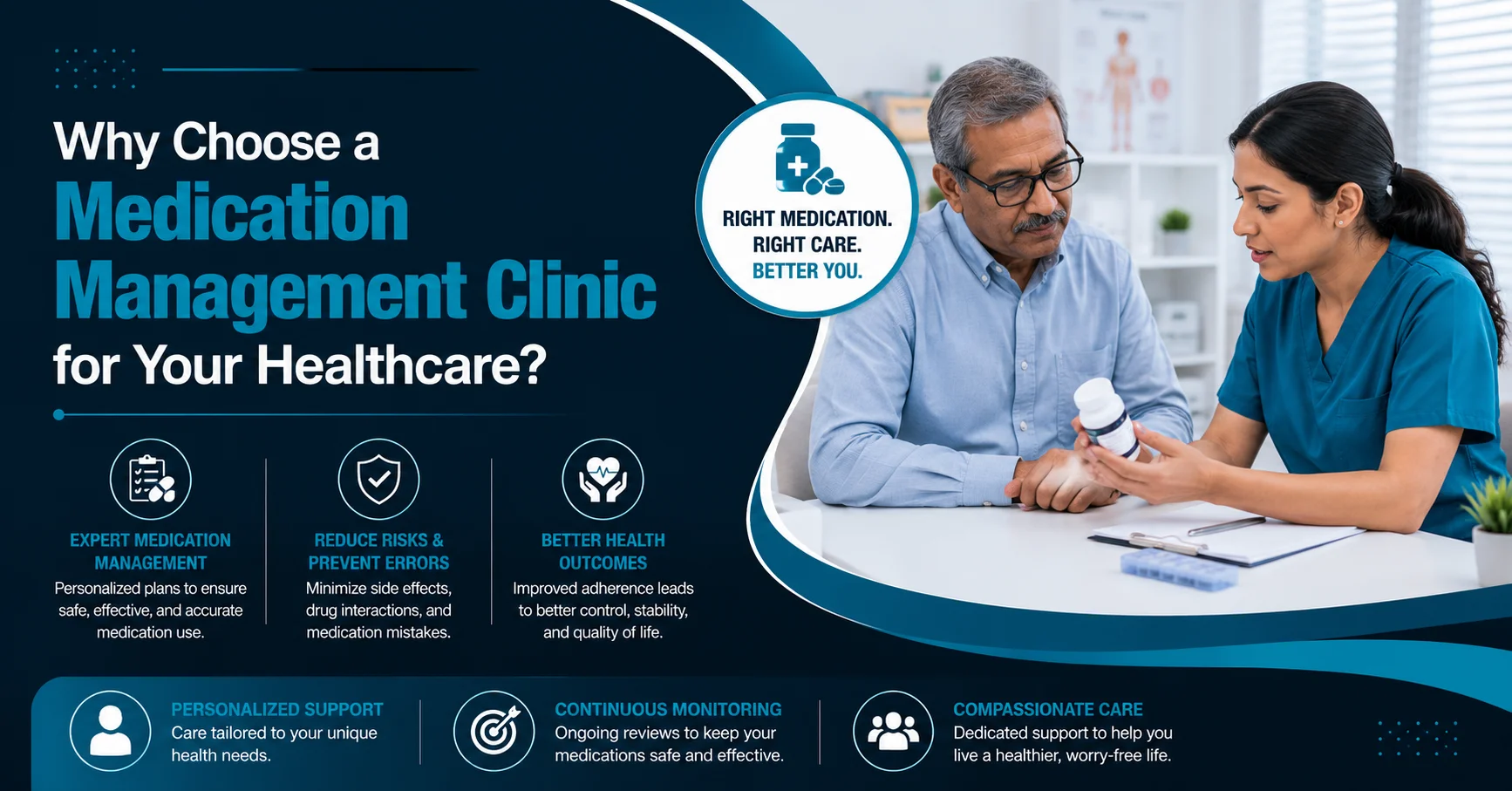
Why Choose a Medication Management Clinic for Your Healthcare?
Picking the right clinic for medication management can help make care related to medication an easier component of your overall healthcare experience. Instead of treating medications as a separate aspect of your health, managing your medication is a good fit with primary treatment as well as chronic disease management, preventive healthcare, senior care, and other healthcare services.
Here are a few main reasons why patients could benefit from medication management by a professional.
1. Get a Better Understanding of Your Medications
One of the main advantages of managing your medication is the chance to gain a better understanding of your prescribed medication.
Patients might have questions about:
What are the medications prescribed for?
What is the best way to take it
How often should it be taken?
How does it fit in the overall treatment strategy
What are the questions to discuss with your doctor
The information on medications must be reviewed, the information on the medication
A clear communication system can make patients more informed about their health.
A medical professional can answer questions about medication in relation to general health care and treatment programs.
2. Keep Your Medication Routine Organized
The routine of taking medication can become more complicated when you have multiple prescriptions.
As an example, a medication might require taking at a specific time while another might be prescribed in a different manner. It is also possible to alter prescriptions after visits or when the doctor reviews a patient’s health.
A clinic for managing medication can assist patients in maintaining a better comprehension of their medications and facilitate clear communication with their healthcare provider.
The purpose isn’t just to develop a list of medications. It’s about ensuring that the information on medications is linked to the overall health plan.
3. Support Chronic Disease Management
Many people with chronic ailments take medications in their treatment for the long term.
Conditions like high blood pressure, asthma, diabetes, and heart disease, as well as other chronic diseases, may require continuous medical attention regularly followed up, lifestyle assistance, and monitoring of medications.
The management of medication is essential to comprehensive chronic health care.
In the Abundant Life Care Clinic, medication support is a part of the other healthcare services geared towards those of our patients who have chronic health issues.
Explore our health services to discover how medication management fits in with a more holistic patient-centered method.
4. Improve Communication With Your Healthcare Team
Communication is an essential element of healthcare that is effective.
Patients can receive treatment from a variety of healthcare experts over time. If the information on medications is not complete or out of date, it could be more difficult to keep an accurate record of the patient’s current treatment plan.
Patients who are treated with medication should talk about:
Current medicines
Recent changes to medications
Concerns about prescriptions
Concerns regarding treatment
Changes in health
Follow-up is required
This type of communication can help healthcare professionals comprehend the current condition of the patient and help determine the best next actions.
5. Support Medication Reconciliation
Medication reconciliation is the process of reviewing medication details to ensure an exact record of the medications the patient is taking.
This is particularly important following:
Hospitalization
Changes in the healthcare provider
A brand new diagnosis
A change in medication
A new prescription
A change in health status
An accurate list of medications will be useful for healthcare visits.
Patients are advised to bring current medical information with them at all times and inform their doctor about any prescription or over-the-counter supplements, vitamins and supplements they are taking.
6. Get Personalized Medication Support
Every patient has their own unique health requirements.
A regimen of medication that is effective for one individual might not work for someone else. The age of the patient, medical history, chronic conditions and treatments, lifestyle, and many other variables can affect health care needs.
This is the reason why individualized medication management is so important.
In the Abundant Life Care Clinic, the management of medication is integrated into a larger patient-centered approach to healthcare. The primary focus is knowing the individual needs of each patient and providing the appropriate support within the overall plan of care.
Find out More about Medical Management Services.
7. Medication Management Can Support Preventive Healthcare
Medication management does not need to be separate from preventive health care.
Preventive care is about maintaining health, identifying possible issues early, and promoting healthy lifestyles and long-term health.
During health appointments, patients are able to talk about medications along with wellness concerns and routine health checks, choices, and other needs for prevention.
This approach is integrated and can assist patients to view medication management as an integral part of their entire healthcare journey.
Explore the topics of Preventive and Wellness Care in order to find out the ways that preventive health care will help you maintain your long-term wellbeing.
8. Helpful for Seniors Managing Multiple Medications
Older adults might be more likely to take multiple medications because of chronic health issues or health issues related to age.
It can be difficult to keep track of the different prescriptions can be a challenge especially when the treatment plans alter.
Medication management may provide the chance to review the medication information and discuss any concerns with a health professional.
For family caregivers and seniors, organized medication records can make communication with healthcare professionals easier.
Management of medications is essential to personalized senior health care.
9. Support for Family Caregivers
The management of medication can be helpful for family members who take care of a loved one.
Caregivers can assist those with chronic ailments to keep track of appointments, medications, and prescribed medication routines.
Clear information about medications will make it easier for caregivers to talk directly with health professionals as well as comprehend the patient’s treatment plan.
However, caregivers must adhere to the guidelines given by healthcare professionals of the patient and should not change the dosage, stop or discontinue the dosage of medications prescribed.
10. Connect Medication Management With Comprehensive Primary Care
One of the main reasons to select a medication treatment clinic is the possibility to link medication-related requirements to other areas of health care.
Concerns about medication may be present in conjunction with:
Preventive healthcare needs
Chronic illnesses
Acute health issues
Needs of senior healthcare
Diagnostic tests
Care coordination
Telehealth appointments
Primary care at home
A holistic approach to healthcare will allow patients to address these issues within a connected experience of care.
Explore the full range of the Abundant Life Care Clinic services to know more about the services available.
What Services Can a Medication Management Clinic Provide?
Medication Reviews
Medication Education
Patients will receive clear and concise details about the medications they are prescribed and ask questions to their physician.
Medication Organization
Medication Monitoring
Medication Reconciliation
Chronic Condition Medication Support
The use of medication-related treatment can be integrated into the ongoing management of chronic health issues.
Caregiver Support
Who Should Consider Medication Management?
Medication management is a possibility for many patients.
Patients Taking Multiple Medications
If you are taking multiple prescriptions, keeping the information about your medications well-organized can become more important.
Medication Education
Patients will receive clear and concise details about the medications they are prescribed and ask questions to their physician.
Patients Managing Chronic Conditions
People with ongoing health conditions might benefit from discussions about medication as part of regular health monitoring.
Seniors
Seniors with multiple medications could get personalized support for their medication and regular contact with health experts.
Patients With Changing Prescriptions
If your medication has been changed recently, having a review could help to ensure that the current information on your medication is correct.
Patients Seeing Multiple Providers
If multiple healthcare providers are involved, having an updated list of medications will help facilitate clearer communication.
Family Caregivers
Family caregivers who help their loved ones with medication might benefit from clear information and communication with healthcare professionals.
How Does Medication Management Work?
The process of managing medication will vary based on the individual’s medical needs; however, it usually starts with knowing the patient’s current medical routine and overall health status.
Step 1: Review Your Current Medications
Your physician may ask about prescription drugs, over-the-counter supplements, vitamins, medicines, and the most recent changes to your medication.
Step 2: Discuss Your Healthcare Needs
The decisions you make regarding your medication are based on the health condition, such as symptoms and treatment objectives, and other elements of your medical background.
Step 3: Identify Questions or Concerns
Patients are able to discuss any medication-related issues or concerns to their healthcare professional.
Step 4: Coordinate With Your Care Plan
The support for medications can be viewed in conjunction with other healthcare treatments and services.
Step 5: Continue Appropriate Follow-Up
The management of your medication may require continuous monitoring based on your medical situation, treatment plan, and the recommendations of your healthcare professional.
Medication Management and Your Overall Healthcare Plan
The management of your medication is not an independent activity in relation to your overall health.
A patient with a chronic illness could require regular medical visits as well as preventive care, tests for diagnosis, medication support and advice on how to live a healthy lifestyle.
Another patient might require assistance with medication following an adjustment in treatment or during a transition between different healthcare providers.
The best approach is dependent on the person.
This is the reason why the medication management program could be beneficial, as medication-related issues are discussed in the context of a larger medical connection.
When Should You Schedule a Medication Management Appointment?
Think about discussing the management of your medication with your physician If:
You may take several drugs.
The prescriptions you are taking have recently changed.
You’re not sure about the current list of medications.
There are questions regarding the treatment plan you have chosen.
You have any of your chronic medical issues.
You’re helping an elderly member of your family by administering medication.
You see multiple healthcare providers.
You are concerned about your regimen for taking medication.
Your physician may suggest the review of your medications.
If you’re experiencing an acute or serious medical condition, seek urgent medical attention instead of waiting for your regular appointment for medication management.
How to Prepare for Your Medication Management Appointment
It is possible to enhance the effectiveness of your appointment by having your medical information ready ahead of time.
Prepare or bring a list that includes:
Names of medications
Prescription doses
How often are medications taken?
Instructions for taking medication
Recent changes to medications
Medicines that are available over-the-counter
Vitamins and supplements
Are you concerned about your medication?
The relevant medical records should be they are available
It is also helpful to inform your healthcare professional about any changes in medical or other treatment that have occurred since the last time you saw them.
Do not alter or discontinue any medication that you are prescribed without first talking to the appropriate medical expert.
Medication Management and Preventive Wellness Care
Preventive wellness and medication management treatment can be a part of a comprehensive healthcare strategy.
Health screenings for preventive care can include wellness appointments, health assessments, preventive screenings, lifestyle advice, and early recognition of health risks that may be present.
Discussions about medication can be integrated into your regular healthcare visits so that your medication routine can be assessed in conjunction with your health concerns.
Find out more about Prevention & Wellness Health Care at the Abundant Life Care Clinic.
Why Choose Abundant Life Care Clinic?
Abundant Life Care Clinic adopts an approach to healthcare that is patient-centered. The clinic provides an extensive primary care program and various options for care that are designed to meet individual requirements.
Medication management is a component of the clinic’s overall health services.
Patients have access to services that cover preventive and wellness services as well as acute treatment and chronic disease management, senior health care, diagnostic and laboratory services, medication management, care coordination, the telehealth service, and primary care in the home.
Visit the Abundant Life Care Clinic to discover more about the practice and its method of delivering individualized health care.
Frequently Asked Questions About Medication Management Clinics
What is a clinic for managing medication?
A medication management clinic offers health care assistance that focuses on reviewing, organizing, monitoring, and coordinating medication-related requirements as part of the patient’s overall health care plan.
Why should you pick a medication management clinic to manage your health?
A medication management clinic could offer personalized assistance for understanding the prescriptions, organizing information about medications, communicating with healthcare professionals, and integrating medication-related requirements into the larger healthcare.
Who is most benefiting from the management of medication?
Patients who are elderly, taking multiple medications, those who are managing chronic diseases, patients who have changing prescriptions, as well as caregivers of family members could need assistance with medication management.
Do you think medication management involves altering prescriptions?
The management of medication may include discussions and reviewing medication, but patients should not alter or stop taking prescribed medications without a prescription from their medical professional.
How can I make an appointment for medication management?
Contact Abundant Life Care Clinic or visit the Schedule an Appointment page to make an appointment.